
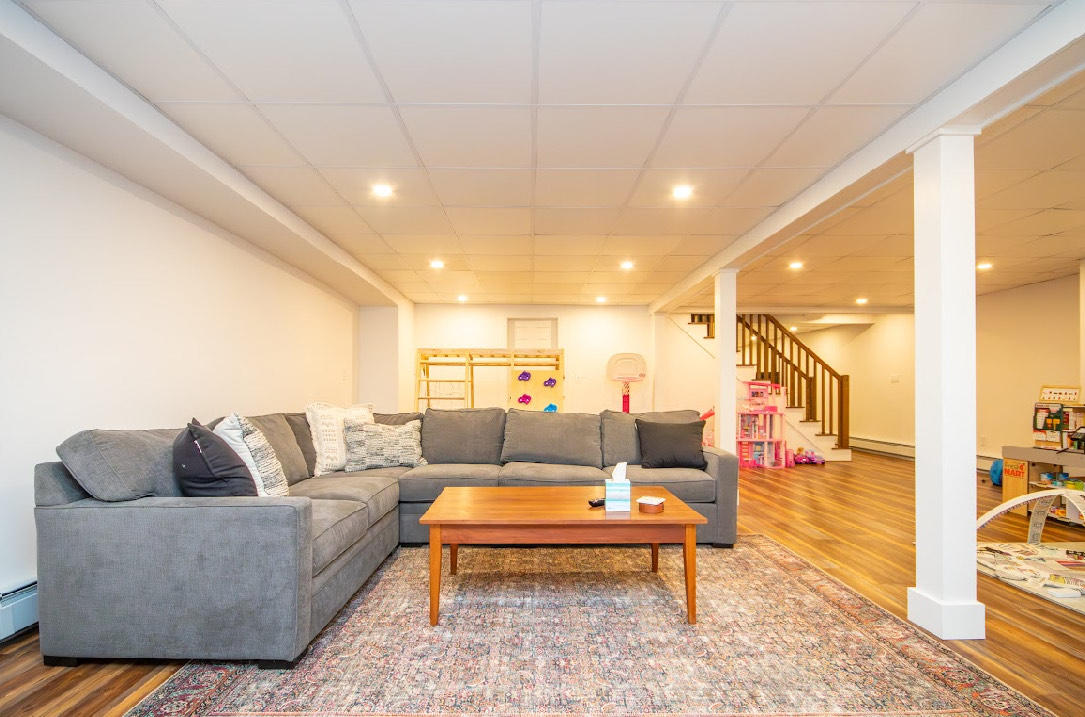
Finishing a basement is one of the most effective ways to add usable living space without changing your home’s footprint. Whether you’re creating a family room, office, gym, or guest space, the difference between something that just looks finished and something that actually feels like part of your home comes down to planning.
In Plymouth County and across the South Shore, basement projects come with their own set of challenges. Moisture, insulation, ceiling height, and mechanical systems all need to be handled the right way from the start.
This breaks down what to expect and how to approach the project so it runs smoothly.
Start With the Right Goal
Before getting into framing or materials, the first step is understanding how the space will actually be used.
Common uses we see:
-
Secondary living room or hangout space
-
Kids’ playroom
-
Home office
-
Guest bedroom or in-law setup
-
Home gym
-
Combination of multiple uses
The clearer the goal, the easier it is to make smart decisions about layout, lighting, and finishes.
Moisture Control Comes First
Basements in this area deal with moisture. The question is how much, not if.
Before finishing anything, we look at:
-
Foundation walls and signs of water intrusion
-
Existing insulation
-
Air gaps and condensation points
-
Bulkhead and exterior conditions
A proper setup usually includes foam board against the foundation, a framed wall slightly off that surface, and air sealing before anything gets closed up.
Skipping this step can lead to mold, odors, and problems behind finished walls.
Framing Around Real Conditions
Basements are rarely clean, open spaces. You’re working around:
-
Lally columns
-
Ductwork
-
Plumbing
-
Electrical
-
Stair and bulkhead areas
The goal is to work with these elements, not fight them.
That might mean boxing out ductwork, building soffits, or laying out the space in a way that makes these features feel intentional.
Insulation Makes a Big Difference
Comfort comes down to how the basement is insulated.
A common approach:
-
Foam board against foundation walls
-
Framed wall spaced slightly off the foam
-
Faced insulation in the stud cavities
This helps control both temperature and moisture and makes the space feel more like the rest of the house.
Ceiling Planning
Ceiling decisions affect both look and function.
Typical options:
-
Drywall for a more finished feel
-
Drop ceiling for access
-
Painted exposed ceiling for a more open look
In a lot of South Shore homes, ceiling height is limited. Planning around ductwork early helps avoid awkward drops later.
Electrical and Lighting
Most basements start with minimal lighting. A finished space should feel consistent with the rest of the home.
That usually means:
-
Recessed lighting for even coverage
-
Proper outlet placement
-
Dedicated circuits where needed
-
Dimmer switches for flexibility
If existing electrical is staying, that should be confirmed early so there are no surprises.
Flooring Choices
Not all flooring performs well in a basement.
Common options:
-
Luxury vinyl plank
-
Tile
-
Engineered flooring depending on conditions
Subfloor prep matters just as much as the finish material.
Doors, Trim, and Finish Work
This is where everything starts to come together.
Details that matter:
-
Matching trim style to the rest of the house
-
Proper door layout
-
Clean transitions between areas
-
Built-ins or storage where it makes sense
This is what makes the space feel finished instead of just completed.
Planning Before Construction
The projects that run the smoothest are the ones where decisions are made early.
That includes:
-
Layout
-
Materials
-
Lighting plan
-
Flooring and trim
Making these choices upfront helps avoid delays and change orders later.
What Affects Cost
Every basement is different, but the main variables are:
-
Size of the space
-
Existing conditions
-
Level of finishes
-
Mechanical updates
-
Permitting requirements
The best way to get clarity on cost is to build out a plan before jumping into construction.
A Better Approach
The goal is not just to finish the basement. It’s to make it feel like it belongs in the house.
That comes from:
-
Clear planning
-
Good communication
-
Addressing hidden issues early
-
Making selections based on how the space will actually be used
Basement Finishing on the South Shore
We work with homeowners throughout Plymouth, Pembroke, Marshfield, Duxbury, Hanover, Norwell, Hanson, Kingston, Hingham, Cohasset, and surrounding areas.
If you’re thinking about finishing your basement, the first step is a conversation around what you want the space to do and how to get there the right way.